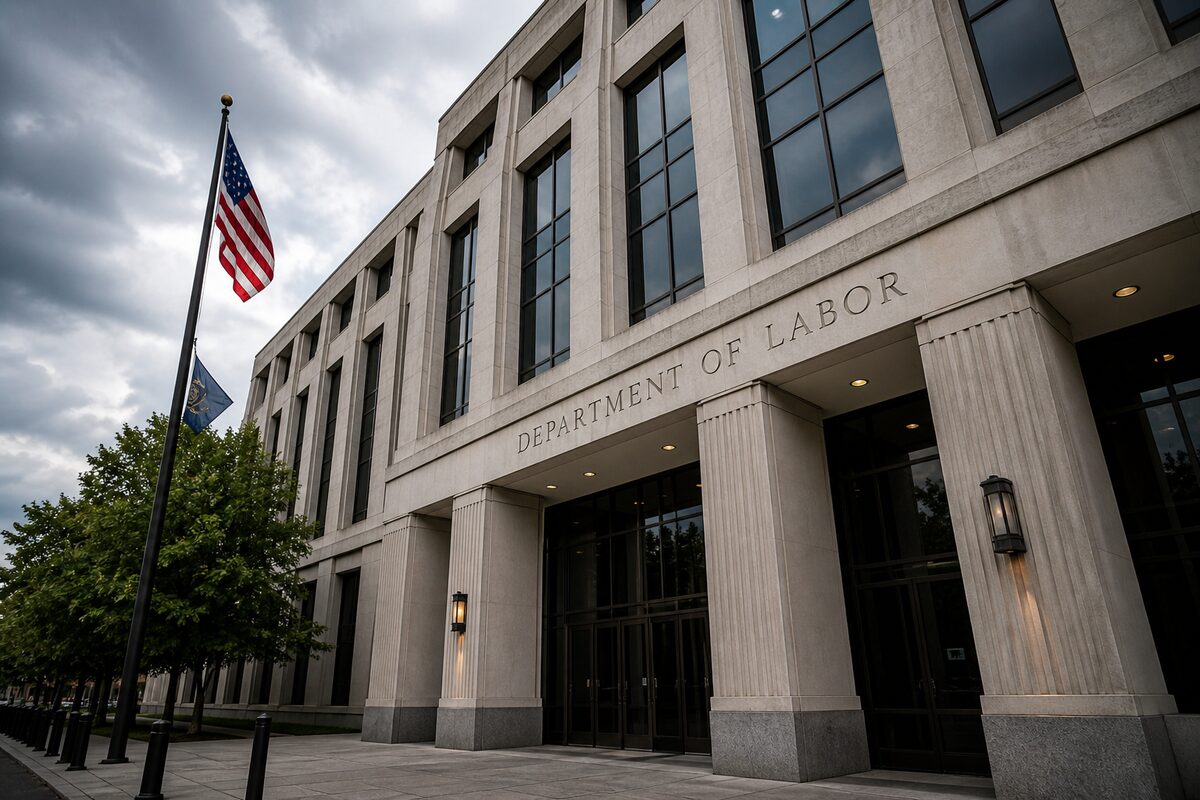
The Shifting Federal UI Landscape: What Changed in Q2 2026
The unemployment insurance system operates at the intersection of federal policy and state administration. When federal executives issue orders affecting workforce reduction, administrative budgets, or program funding, the consequences ripple through state UI trust funds, employer tax rates, and claims processing infrastructure. In Q2 2026, recent executive orders have begun reshaping this landscape in ways employers must understand now.
The federal government directly or indirectly influences unemployment insurance through four primary mechanisms: funding for state UI administration, eligibility rules under federal law, the integrity of state trust funds, and coordination with federal employment programs. Changes in any of these areas can increase employer tax burden, extend claims processing timelines, and force mid-year adjustments to payroll budgeting.
"Federal workforce reductions are often treated as isolated government personnel decisions. But they create a cascading effect on state UI systems: claim surges overwhelm processing capacity, state trust funds become stressed, and multi-state employers face both shorter payment timelines and higher tax exposure."
Recent Executive Actions Reshaping UI Administration
Two categories of executive action are now affecting the UI landscape:
1. Federal Workforce Reduction Orders
Executive mandates for federal payroll reductions in specific agencies create immediate UI exposure. When a federal agency sheds 5,000 to 25,000 positions, those employees transition to unemployment benefits within 30 to 90 days. States with large federal employment concentrations, such as Virginia, Maryland, California, and Colorado, face sudden claims surges that overwhelm processing infrastructure designed for steady-state volume.
A 15,000-person federal workforce reduction in a single state generates approximately 12,000 to 14,000 new UI claims within the first quarter, assuming a 90% claims filing rate. That volume spike occurs faster than states can process standard appeals, fact-finding interviews, and determinations. The result: claims backlogs extend payment cycles from the standard 7-10 days to 14-21 days or longer.
2. Federal Administrative Budget Constraints
Recent executive orders have reduced federal grants to state UI agencies for operational costs. The federal government normally provides approximately 75% of state UI administrative budgets through the Unemployment Insurance Improvement Fund (UIIF). When federal appropriations decline, states face hard choices: reduce claims processing staff, delay determinations, or increase filing fees and employer tax rates to cover the shortfall.
States like New York, California, and Illinois, already carrying federal loan balances from prior years, are particularly vulnerable. Reduced administrative funding means slower claims processing, which increases the likelihood that eligible claimants will appeal or escalate, creating secondary workload spikes for employers defending determinations.
How Federal Policy Changes Affect State UI Trust Funds
Federal workforce reductions trigger a secondary effect on state trust fund solvency. Here's the mechanism:
- Claims volume surge. 12,000 to 50,000 new claims in affected states within 90 days
- Trust fund benefit payout increases. Average federal employee unemployment benefit: $450-550/week for 26 weeks. Total cost per claim: $11,700-14,300
- State trust fund depletion. In states already carrying federal loan balances (CA: $2.8B, NY: $1.6B), reduced reserves trigger additional federal borrowing
- Automatic FUTA credit reduction. States borrowing federal funds face automatic 0.1% to 0.5% FUTA credit reductions, passed on to all employers in that state
For an employer with 500 employees in New York (already facing a 0.3% FUTA credit reduction due to prior state debt), an additional 0.2% reduction from new federal workforce reductions would add $700 per employee annually, or $350,000 in additional federal tax liability.
Multi-State Employers: Compounded Exposure
National employers with footprints in multiple states face compounded risk. Consider a company with 8,000 employees distributed as follows:
- Virginia: 1,200 employees (15%, high federal employment concentration)
- Maryland: 800 employees (10%)
- California: 1,500 employees (18.75%)
- Colorado: 600 employees (7.5%)
- Other states: 3,900 employees (48.75%)
If federal workforce reductions trigger FUTA credit reductions in Virginia, Maryland, and California, the employer faces:
- VA impact: 1,200 × $7,000 × 0.2% = $1,680/year
- MD impact: 800 × $7,000 × 0.15% = $840/year
- CA impact: 1,500 × $7,000 × 0.3% (existing) + 0.1% (new) = $4,200/year
- Total incremental federal tax: $6,720 annually
For a $500M revenue company, $6.7K is noise. But for a $50M company, it's 0.013% of revenue, and more importantly, it illustrates the kind of tail-risk cascades that require CFO-level contingency planning.
Increased Claims Volume: Processing Delays and Employer Workload
Beyond tax exposure, federal workforce reductions create operational friction for employers. State UI agencies facing claim backlogs begin to prioritize determinations and appeals more slowly. This means:
Longer Payment Timelines
Claims normally move from filing to first payment in 7-10 days. During volume surges, payment delays extend to 14-21 days. This creates temporary cash flow friction for claimants but also extends the period during which employers can protest determinations or request fact-finding interviews.
Increased Employer Appeals Workload
When states are backlogged, employers receive fact-finding requests and determinations in batches rather than continuously. An employer might receive 50-100 determination appeals within a two-week window instead of spread across the month. This compresses the employer's timeline to respond, increasing the risk of missing protest deadlines.
Higher Dispute Rates
Federal employees typically file for benefits under specific eligibility categories (temporary layoffs, RIFs with recall rights). States with large federal employment surges often extend eligibility or simplify benefit determinations to process volume faster. This can result in broader-than-normal eligibility grants, which employers then contest through appeals. The appeals backlog then compounds state processing delays.
Employers should now conduct a three-step readiness audit: (1) Identify which states you operate in with high federal employment concentrations (VA, MD, CA, CO, TX, IL, NY, GA). (2) Review your Q1 2026 claims volume in those states and identify any month-to-month increases that could signal federal workforce actions. (3) Confirm your claims protest procedures and response timelines with each state, ensuring your HR/Payroll team can respond to batch determinations within required windows.
What States Are Doing in Response
State UI agencies are already taking proactive measures to prepare for federal policy volatility:
Hiring Surge for Claims Processors
California, Virginia, and Maryland have announced plans to hire 200-400 additional claims examiners in Q2-Q3 2026 to build processing capacity. These positions typically take 60-90 days to onboard, meaning processing improvements may not materialize until late Q3.
Temporary Eligibility Simplifications
Some states are pre-authorizing temporary simplifications to benefit eligibility calculations for federal employee claims. This reduces determination time but creates risk for employers, as overpayments may not be caught and recovered until after payment, forcing employer appeals and potential charge adjustments.
Emergency Federal Loans
States anticipating trust fund stress are pre-positioning federal loan requests. The Department of Labor has indicated willingness to fast-track advance federal loans to states facing anticipated claims surges. This is administratively positive (it prevents benefit payment delays) but economically negative for employers (it increases the risk of future FUTA credit reductions).
How Federal Funding Changes Affect Employer Compliance Burden
Reduced federal administrative funding creates a second-order impact on employer compliance. States cut in administrative funding often raise employer compliance thresholds, increase audit frequencies, and become more aggressive in wage allocation and misclassification enforcement.
When a state loses $50M in federal administrative grants, it must recover that revenue through:
- Increased employer tax rates (SUTA rate increases for groups with poor claims experience)
- More aggressive audit activity (wage underreporting, misclassification enforcement)
- Higher employer contribution assessments (surcharges for delinquent employers)
- Stricter experience rating penalties
Employers should expect that state agencies in financially stressed states will initiate more payroll audits, request more detailed wage allocation documentation, and challenge prior-year employer contributions. This is not malicious; it's a fiscal necessity when federal support declines.
Preparing for 2026 Federal UI Volatility: Five Action Items
1. Map Your Federal Employment Exposure
Identify which of your employees work in federal locations, federal contracting roles, or states with high federal employment concentrations. If you have 100+ employees in states like Virginia, Maryland, Colorado, or Northern California, federal workforce actions could create measurable claims surges in your portfolio.
2. Update Your Claims Protest Calendar
Pull your state UI protest windows and deadlines. Each state has different response timelines (typically 10-14 days from determination). Create a shared calendar for Q2-Q4 2026 that flags weeks when you anticipate higher claims volume, and ensure your HR/Payroll teams have pre-drafted protest templates and response procedures.
3. Establish State Agency Communication Channels
Reach out to your state UI office contacts (via USC or your own relationships) to understand their Q2-Q4 2026 capacity plans. Ask: Are they planning to hire additional processing staff? Do they anticipate administrative funding reductions? Are they considering temporary eligibility simplifications? Having this intelligence now allows you to calibrate appeals strategy and response priorities.
4. Model Scenario SUTA and FUTA Exposure
Work with your CFO to model two scenarios: (a) baseline, assuming no significant federal workforce reductions; (b) stress case, assuming 20,000+ federal reductions in your operating states and a 0.1-0.2% FUTA credit reduction cascade. Understand the dollar impact on Q2-Q4 2026 payroll tax accruals.
5. Engage Your UI Expert Partner Now
If you don't have a dedicated UI counsel or consulting partner, now is the time to engage. A multi-state employer with $50M+ in annual payroll should have a partner who monitors federal policy shifts, state trust fund stress, and claims processing trends. This allows you to shift strategy (appeals intensity, voluntary contributions, or headcount allocation) when conditions change.
The Broader Context: Federal Policy Uncertainty as a Business Risk
Federal UI policy is now a material business risk category. In prior decades, UI was a stable, compliance-driven cost center. But the combination of federal workforce volatility, state trust fund stress, and reduced administrative funding means that UI risk can shift dramatically within quarters.
Large employers should treat federal UI policy the way they treat interest rate policy: monitor it, model scenarios, and adjust strategy when conditions warrant. This doesn't require a dedicated team, but it does require quarterly review of federal workforce trends, state administrative funding announcements, and trust fund solvency reports.
By understanding the cascade (federal policy shifts → state trust fund stress → employer FUTA exposure → claims processing delays → increased appeals workload), employers can be proactive rather than reactive when volatility strikes.
Navigate Federal UI Policy Uncertainty With Confidence
USC's policy and compliance team monitors federal and state UI developments in real time. We help employers model exposure scenarios, optimize state-by-state strategy, and respond to federal policy shifts before they impact your bottom line. Request a confidential policy impact review.
Schedule Review