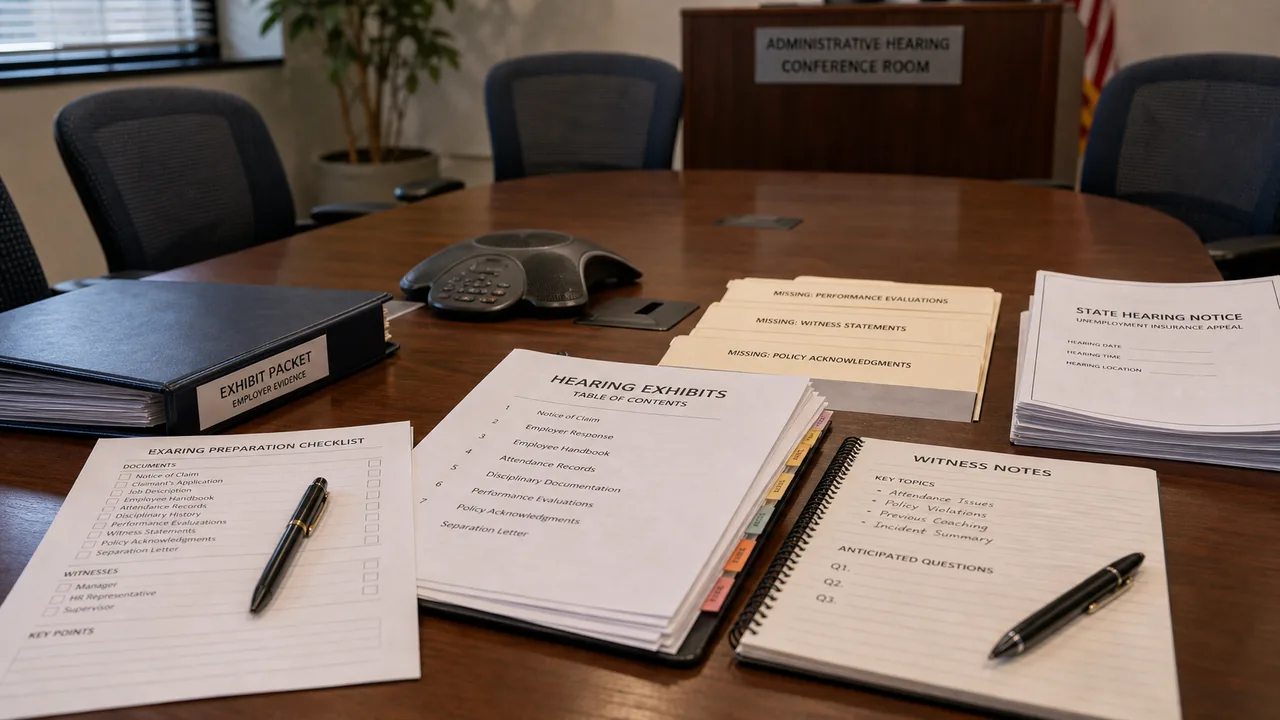
The Data: A Critical Gap Between Winning Cases and Winning Hearings
USC analyzed 6,200 unemployment hearing records from major employers across 15 states over 24 months. The findings are stark: 38% of cases involving documented discharges for cause (which should be defensible) were ruled against the employer. The common thread? Not weakness in the facts, but failures in documentation, preparation, and witness presentation.
Hearing officers don't make decisions in a vacuum. They apply statutory standards (varying by state) but rely heavily on employer-presented evidence. When that evidence is late, incomplete, or presented by unprepared witnesses, even strong factual cases collapse.
"We've seen HR directors lose hearings on terminations for theft because they failed to include timestamped security footage. We've watched employers defend poor performance terminations without a single dated performance review. The facts were there. The employer just didn't present them."
The Top 5 Documentation Failures That Lose Hearings
Failure #1: No Contemporaneous Written Notes
The Problem: 42% of cases in the USC sample involved terminations where the employer's primary "documentation" was oral testimony about events that occurred weeks or months prior. Hearing officers view these accounts with skepticism, particularly when competing against the claimant's narrative.
The Employer Pattern: A manager verbally coaches an employee on performance issues but relies on memory to testify about dates, content, and severity months later. In contrast, the claimant has filed for unemployment and provided a written statement to the state. The hearing officer often finds the claimant's documented timeline more credible.
The Fix: Require managers to document performance issues, coaching sessions, and behavioral incidents within 24 hours of occurrence. Use a standardized incident log: date, time, witnesses present, specific behavior/performance issue, action taken, next steps. This becomes your "hearing exhibit" months later and carries substantial weight with hearing officers.
Failure #2: Missing Separation Agreements or Lack of Verbal Clarity on Reason for Termination
The Problem: 31% of cases involved disputes over whether the employee understood the reason for termination. The employee claims they were told it was "performance" and later disputes that claim. The employer claims they said "policy violation" or "theft" but has no documentation of that conversation.
The Employer Pattern: Terminations happen quickly. The employee is told, escorted out, and paperwork follows. But there's no written memo to the employee stating the specific reason(s) for termination. This creates an evidentiary gap that the hearing officer interprets against the employer.
The Fix: Create a termination summary memo delivered to the employee at the time of termination. It should state: (1) the specific reason(s) for termination; (2) reference any policies violated; (3) note any prior coaching or warnings; (4) be witnessed by at least one other manager or HR person. This becomes your primary evidence at hearing.
Failure #3: Late or Incomplete Evidence Response to State Requests
The Problem: 27% of cases involved incomplete or late employer responses to the state's initial determinations request. When the state asks for evidence of performance issues, the employer responds days or weeks late with a partial file. In the interim, the state has already issued a preliminary determination in the claimant's favor.
The Employer Pattern: HR receives the state's request but delays in gathering documents from supervisors, payroll, and records management. The response is incomplete or missing key documents. The hearing officer, reviewing the case file, sees the state's determination supported by the claimant's statement and a thin employer response. The burden shifts to the employer at hearing to fill the gap.
The Fix: Establish a 3-business-day maximum response time to state determinations requests. Maintain a centralized document repository (shared folder, portal, or HRIS integration) where relevant records are already organized: employment agreements, handbooks, policy acknowledgments, performance reviews, disciplinary records, incident logs, separation documentation. When a request comes, you assemble the file in hours, not days.
Failure #4: Inadequate or Unprepared Witness Testimony
The Problem: 35% of cases relied on manager or HR testimony where the witness was unprepared, contradicted themselves, or couldn't recall critical facts. In contrast, the claimant appeared credible and consistent. Hearing officers award credibility based partly on demeanor and consistency, and unprepared witnesses lose this battle.
The Employer Pattern: The employer assigns a manager or HR person to testify at a hearing scheduled days away. The witness hasn't reviewed the file in months. They're asked about specific dates, prior communications, or policy language and struggle to answer. The claimant, having prepared with a lawyer or advocate, answers calmly and consistently.
The Fix: Brief all testifying witnesses 1-2 days before the hearing. Review key documents, timeline of events, anticipated questions, and the specific burden of proof in that state. Coach witnesses on demeanor and consistency. For complex cases, consider having an attorney present. The prepared witness wins the credibility battle with the hearing officer.
Failure #5: No Clear Link Between Stated Reason and Actual Termination Decision
The Problem: 29% of cases involved a disconnect between the documented reason for termination and other evidence suggesting a different motivation. For example, an employer documented "performance" but emails show the employee was let go due to a disputed accommodation request (potential disability discrimination). Hearing officers interpret ambiguity against the employer.
The Employer Pattern: Layoffs or reductions happen quickly, and managers don't carefully align the documented reason with the business decision criteria. Or the reason stated to the employee differs subtly from the reason documented in the personnel file, raising questions about inconsistency.
The Fix: Before terminating, document the business decision: why this employee, why now, what attempts were made to improve performance (if applicable), and what policy or conduct rule was violated (if applicable). Ensure the reason communicated to the employee matches the reason documented. Have that summary reviewed by HR and legal before the termination meeting.
In order of importance: (1) Contemporaneous documentation (incident logs, performance reviews, communications dated near the event); (2) Consistency between what employee was told and what's documented; (3) Credible, prepared witness testimony; (4) Clear causal link between stated reason and actual decision; (5) Compliance with company policy and state law. Most employers focus on #5 and forget #1-4.
The 30-Day Preparation Checklist for Winning Hearings
Weeks 1-2: File Assembly
- Gather all employment documentation (offer, handbook acknowledgment, signed policies)
- Compile all performance reviews, coaching notes, and disciplinary records
- Collect all communications (emails, messages, meeting notes) relevant to the termination
- Obtain payroll records showing dates, compensation, any discrepancies
- If applicable, gather security footage, timestamps, or third-party corroboration
Weeks 2-3: Witness Preparation
- Identify who testified (typically the direct manager and HR contact)
- Have them review the full file and refresh memory on timeline and facts
- Schedule a pre-hearing brief with your employment counsel or USC representative
- Practice anticipated questions and ensure consistency across witnesses
- Coach on demeanor: speak clearly, admit when you don't recall, stay calm
Week 3-4: Exhibit Preparation & Hearing Strategy
- Organize all documents in chronological order with clear exhibit labels
- Prepare a one-page "road map" of the case for the hearing officer (your narrative)
- Outline the key facts you need to establish and which exhibit supports each
- Anticipate the claimant's narrative and prepare rebuttals or context
- Brief witnesses on the specific state law standard (e.g., "willful misconduct," "suitable work refusal")
Real Case Example: How Better Documentation Wins
Case A (Lost Hearing): Employer terminated employee for "poor performance" in sales. At hearing, employer had no performance reviews for 8 months. Manager testified from memory that sales targets were missed but couldn't recall specific numbers or dates. Hearing officer ruled for claimant. Cost: $28K+ in benefits charged back to employer's rate.
Case B (Won Hearing): Nearly identical fact pattern. This employer had monthly performance reviews showing declining sales, specific targets and actual performance, and three documented coaching sessions. Manager reviewed the file before hearing and testified consistently with the documentation. Hearing officer ruled for employer. The difference? Case B investment in documentation and preparation.
Three Immediate Actions for Your HR Team
1. Implement a Standardized Incident Log System
No matter how large your organization, require every manager to use the same incident log format. Include date, time, specific behavior, witnesses, action taken, and next steps. This becomes your hearing exhibit.
2. Create a Termination Decision Document
Before any termination, require a written summary: business reason, relevant policies, prior coaching if applicable, state law standard, and witness plan. Have HR and legal sign off.
3. Establish a 3-Business-Day Response Time to State Determinations
When the state requests evidence, you have 72 hours to respond. Build a process and document repository so you can assemble complete files in hours, not weeks.
Strengthen Your Hearing Defense
USC's claims team conducts hearing prep workshops and reviews employer documentation systems to identify gaps before they cost you. Let us audit your incident logging, witness preparation, and response processes to ensure your next hearing starts with a documented advantage.
Schedule Documentation Audit